Whether the problem is grubs under the surface or fast-moving pests like armyworms, we focus on stopping the damage, reducing repeat pressure, and helping your lawn recover so it can thicken back up.

Whether the problem is grubs under the surface or fast-moving pests like armyworms, we focus on stopping the damage, reducing repeat pressure, and helping your lawn recover so it can thicken back up.
It’s never been easier to have a beautiful lawn. Call today to lock in your savings and get two FREE applications. But time is running out!
Get your free quote and offer for two FREE applications by filling out the form below.
Opt into our text messaging platform to begin your program and schedule with us today!
There’s a specific kind of frustration that comes with lawn damage you can’t explain. You’re watering. You’re mowing. You might even be fertilizing. And still, the grass starts thinning, patches turn brown, and certain areas look like they’re giving up for no reason. When that happens, insects are often the missing piece, especially the ones you don’t see until the damage is already done.
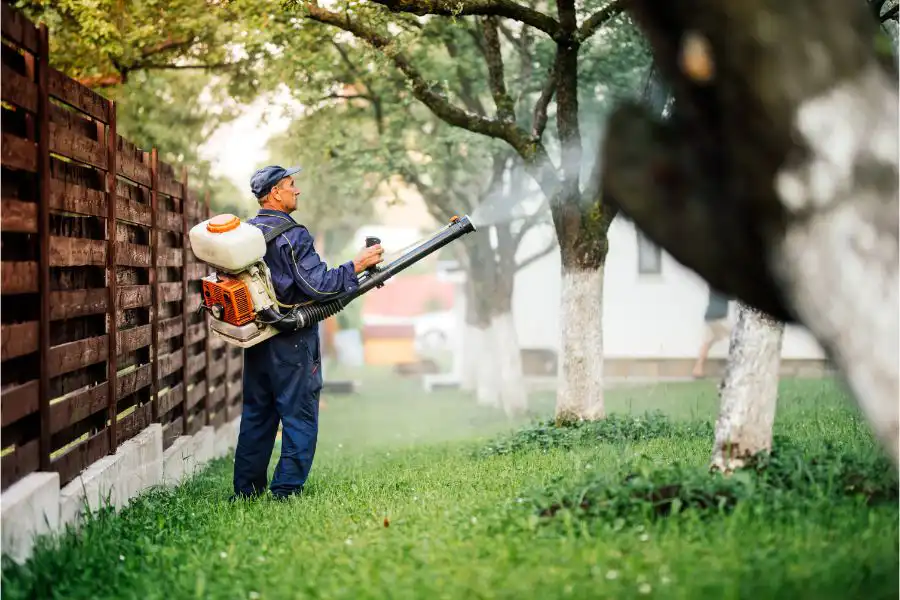
Turf Wizards provides insect and grub control services to protect your lawn from the pests that chew, feed, and weaken turf from the roots up.
 Most homeowners notice the same warning signs:
Brown patches that spread even when watering is consistent
Grass that feels loose or pulls up too easily
Spongy areas underfoot
Increased bird activity pecking at the lawn
Raccoons or skunks digging at night
Sudden, fast decline that feels like it happened overnight
If you’re seeing more than one of these, it’s worth getting it checked before the damage expands.
Most homeowners notice the same warning signs:
Brown patches that spread even when watering is consistent
Grass that feels loose or pulls up too easily
Spongy areas underfoot
Increased bird activity pecking at the lawn
Raccoons or skunks digging at night
Sudden, fast decline that feels like it happened overnight
If you’re seeing more than one of these, it’s worth getting it checked before the damage expands.
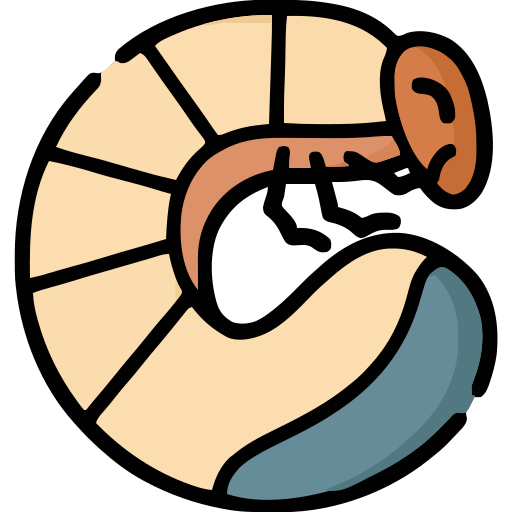
Grubs are one of the most damaging lawn pests because they feed on roots. When roots are chewed up, grass can’t pull water or nutrients properly, so it weakens quickly. Grub damage often shows up as patchy browning and turf that lifts up in sections like a loose rug.
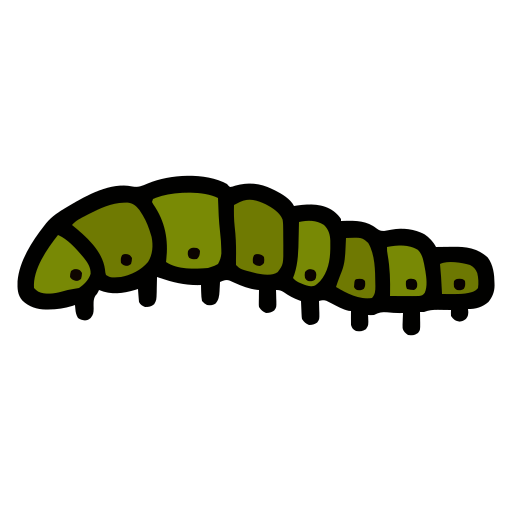
Armyworms can do fast, visible damage because they chew grass blades and can move across the lawn quickly. Many homeowners first notice them when the lawn looks ragged, uneven, or suddenly thinned out in patches.
Chinch bugs feed near the surface and can make grass look dry and stressed, especially during hot periods. The damage can look exactly like drought stress, which is why it’s easy to miss until it spreads.
Sod webworms feed at night and can leave behind thin, worn-looking turf that doesn’t bounce back. If the lawn looks tired and uneven even when your routine hasn’t changed, they may be part of the issue.
Step
1
Lawn Walkthrough
We start by walking the lawn and focusing on the areas that are changing. We look for patterns and signs of feeding damage, weak turf, and the spots where pests tend to show up first.
Step
2
Identify What’s Driving the Damage
Not all lawn decline is insect damage, and not all insects are treated the same way. We narrow down whether the problem looks like grubs, surface-feeding pests, or a combination of stress factors.
Step
3
Targeted Treatment Plan
We build a plan based on what your lawn needs, not a blanket approach. The goal is to stop active damage while avoiding unnecessary treatments.
Step
4
Apply Treatments at the Right Time
Timing matters with lawn pests. Treating at the right point in the pest cycle improves effectiveness and helps prevent a quick rebound.
Step
5
Support Lawn Recovery
Once pest pressure drops, the lawn often needs support to bounce back. If needed, we can recommend pairing insect control with fertilization, weed control, or aeration so the turf fills back in instead of staying thin.
Some lawns only need treatment when a problem shows up. Other lawns do better with prevention, especially if pest pressure tends to repeat year after year.
Preventative treatments can help:
We’ll recommend the simplest plan that matches what’s happening.
You already see active damage spreading
The lawn is thinning quickly
Animals are digging or turf is lifting easily
You want to stop the problem before it expandsWhen your lawn is getting chewed up, you want answers and you want a plan that actually makes sense. Turf Wizards keeps service clear, targeted, and focused on results.
If turf lifts easily, brown patches spread, and animals are digging, grubs are a strong possibility. A quick inspection helps confirm what’s likely causing the issue.
Armyworms can cause noticeable damage fast. If the lawn looks ragged or thins quickly, early treatment helps prevent larger turf loss.
It stops the damage, which is step one. After that, recovery depends on turf condition and whether the lawn needs support like fertilization or overseeding to fill back in.
Treatments vary by product and application. We provide clear re-entry guidance so you know when normal yard use can resume.
Some lawns only need one-time help, while others benefit from seasonal prevention, especially when grub pressure is common. We’ll recommend what makes sense for your lawn.
If your lawn is thinning, patchy, or getting worse fast, don’t wait and hope it clears up. Request a free quote from Turf Wizards and we’ll help you figure out what’s driving the damage, treat it the right way, and support recovery so your lawn can start thickening back up instead of continuing to lose ground.